

Lawn & Landscape Care: The Professional Standard
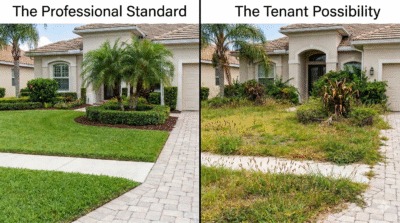
One of the most frequent points of friction between property owners and residents is yard maintenance. While it may seem like a simple chore to pass on to a resident, maintaining a Florida landscape is actually the management of a high-value, depreciating asset. Leaving a multi-thousand-dollar landscape in the hands of a resident who likely lacks the tools, time, and horticultural expertise almost always leads to property depreciation and HOA disputes.
Legal Authority: Landscaping Maintenance
Review this vital legal update from the Law Offices of Heist, Weisse & Wolk regarding the complexities of landlord-tenant lawn responsibilities in Florida.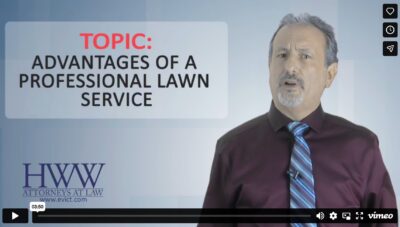 Watch Video
— Marc Cunningham, Property Management Systems (PM Build)
The 5 Pillars of Landscape Protection
1. Basic Lawn Care (The Standard)
This includes mowing the turf at the correct seasonal height, vertical edging of all curbs/driveways, string trimming (weed whacking), and blowing clippings off hard surfaces.
The Risk: This is the a common source of HOA violations. Residents often “just mow,” skipping the vertical edging and blowing. To an HOA, a shaggy curb line or grass clippings in the street are immediate triggers for a fine. Furthermore, residents often use dull blades or incorrect deck heights, which stresses the grass and invites disease.
The Recommendation: Owners should provide professional mowing and edging. It ensures 52 weeks of consistency and eliminates the “blame game” when an HOA notice arrives.
2. Detailed Landscape Bed & Hedge Maintenance
This involves hand-weeding flower beds, trimming and shaping hedges/shrubs, and refreshing mulch or pine bark.
The Risk: Weeds can overtake a Florida garden bed in just a few weeks. Residents almost never hand-weed beds or spray weed killer or add mulch. Once a bed is neglected, the cost to “reclaim” the landscape through a professional cleanup is often significantly higher than the cost of monthly maintenance. Overgrown hedges can also damage siding and provide a bridge for pests into the home.
The Recommendation: This service must be bundled with your mowing contract. Residents lack the horticultural knowledge to prune correctly, often “hacking” plants in a way that stunts growth or kills the ornamental value.
3. Specialized Turf & Ornamental Health
This is the technical management of your lawn: seasonal fertilization, preventative pest control (Chinch bugs/Sod webworms), and fungicide applications for the turf, shrubs, and trees.
LEGAL WARNING: NO RECOURSE AGAINST RESIDENTS
As noted by Heist, Weisse & Wolk, P.A., a resident cannot be held liable for a dead lawn unless you can prove “intentional neglect.” Because residents are not licensed professionals, they cannot be expected to identify Chinch bugs or fungus before the lawn is destroyed. Relying on a resident for turf health often leaves the owner with no legal recourse when a $5,000 lawn needs to be replaced.
The Recommendation: Owners should manage a professional “Turf & Ornamental” (T&O) program. This protects every plant on the property—not just the grass—from Florida’s unique pest and disease pressures.
4. Tree Management & Safety
 This includes professional pruning of tall trees and “canopy lifting” for smaller trees reachable from the ground.
The Risk: Asking a resident to climb a ladder or use a power saw creates a massive legal and physical liability for the homeowner. Improper pruning can also ruin the structural integrity of expensive palms or shade trees.
The Recommendation: This is always an owner responsibility. Tree work should be handled by an insured arborist to ensure safety and proper growth patterns.
5. Irrigation & Sprinkler Systems
Most leases require the resident to “water” the lawn, but this creates a direct conflict of interest. Residents are incentivized to save money on water bills, which often leads to under-watering—the primary cause of dead St. Augustine turf.
The Risk: A single broken sprinkler head or a timer reset during a power outage can kill hundreds of dollars in sod in just a few days of heat. Residents rarely notice these failures until the grass is already brown.
The Recommendation: Owners should provide an Annual Irrigation Audit. A professional “wet check” once a year ensures heads are aimed correctly, timers are set for the season, and there are no hidden leaks wasting money or killing your grass.
Understanding Your Liability & The HOA “Moving Target”
HOA Volatility: Associations are not static. Leadership changes often result in a “crackdown” on items that were previously ignored. Professional crews provide the consistency needed to keep the property out of the violation spotlight, regardless of who is on the board.
Premises Liability: In Florida, landlords have a duty to maintain a safe environment. If a resident is injured while performing yard work they aren’t equipped for (falling from a ladder, mower accidents, etc.), the homeowner may be held liable. Hiring an insured professional service shifts these high-risk tasks to a vendor, providing a vital layer of legal protection.
The Professional Standard
To truly protect your asset and ensure the highest return on your investment, we recommend the Professional Standard of management:
- Professional Lawn Care & Landscaping Maintenance: Including mowing, edging, and monthly landscape bed weeding and shrub trimming.
- Professional Treatment Program: A comprehensive program for your turf, landscaping, and trees to prevent pests, disease, and nutrient deficiencies.
Frequently Asked Questions
1. If my resident is responsible for the lawn but receives an HOA fine, who pays?
Legally, the owner is responsible to the Association for the fine. While the owner can seek reimbursement from the resident, collecting these funds can be difficult and can lead to a breakdown in the relationship. Professional service eliminates this risk entirely.
2. Can I increase the rent to cover the cost of professional landscaping?
Yes. Many high-quality residents are willing to pay a premium for a “maintenance-free” lifestyle. Including these services often makes your property more competitive in the rental market.
3. Why can’t I just charge the resident’s security deposit if the lawn dies?
Unless you can prove intentional neglect, Florida courts often view a dead lawn as “wear and tear” or an “act of nature.” Proving that a resident failed to water is legally challenging and often unsuccessful.
4. Does “Basic Lawn Care” include weeding the flower beds?
Usually, no. In the industry, “Lawn Care” refers to the grass. “Landscaping Maintenance” refers to the beds and bushes. This is why we recommend a bundled contract that covers both.
5. How often should an irrigation system be inspected?
We recommend a professional “wet check” at least once per year. This ensures heads are properly aimed before the dry season and that no leaks are damaging your foundation or wasting money.
Have questions about a current violation or want a quote for professional service?
Contact our team today to protect your investment.
