

Every rental application tells a story. The problem is that not every story is true. A strong rental screening process does more than collect paperwork, it confirms that what an applicant claims on paper actually matches reality. For property owners and investors in Pasco and Hillsborough County, skipping this step is one of the most expensive mistakes you can make. One bad placement can cost thousands in lost rent, legal fees, and property damage. Verification is how you protect that investment before it becomes a problem.
The Scale of Rental Application Fraud in the Rental Screening Process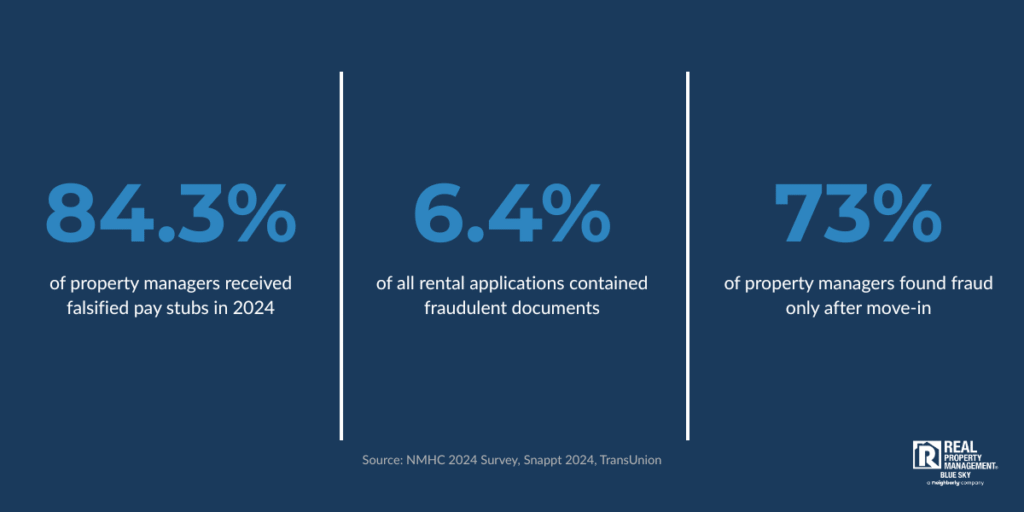
Fraud in the rental market is not a rare edge case. According to a 2024 survey by the National Multifamily Housing Council, 84.3% of property managers received applications with falsified pay stubs, employment references, or income documentation. Snappt’s 2024 fraud analysis of nearly 5 million rental documents found that 6.4% contained manipulated information, which translates to more than 80,000 fraudulent documents in a single year.
The consequences show up quickly. Researchers found that 23.8% of eviction filings over the past three years were directly linked to fraudulent applications where tenants misrepresented income or employment and could not afford the rent. A TransUnion-commissioned study found that 73% of property managers discovered evidence of fraud only after a tenant moved in. At that point, an eviction averages $3,500 or more and takes months to complete.
Document verification is the layer of the rental screening process that catches these cases before they become your problem.
What Documents Should Be Verified in the Rental Screening Process
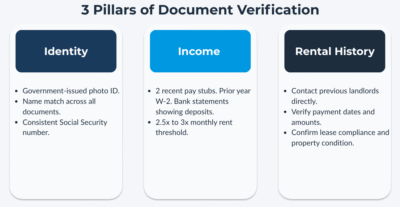
A thorough rental screening process requires verification across three core areas: identity, income, and rental history. Each one represents a different risk category, and each requires a different approach.
Identity Verification
Identity fraud is more common than most landlords expect. The same 2024 survey found that 70% of property managers reported encountering identity theft or fraudulent ID documents. Verifying identity means cross-referencing a government-issued photo ID against the application, checking that the name matches what appears on credit and background reports, and confirming the Social Security number is consistent across all submitted documents.
Income Verification
The standard threshold most property managers use is a gross monthly income of 2.5 to 3 times the monthly rent. Verifying that figure requires more than one document. For W-2 employees, request the two most recent pay stubs, a W-2 from the prior year, and bank statements showing corresponding deposits. The pay stubs confirm current earnings. The bank statements confirm those earnings are actually hitting the account. When documents seem questionable, contact the employer directly using a publicly listed phone number, not the one provided on the application.
For self-employed applicants or gig workers, the standard is different. Request tax returns (Form 1040) from the past two years and a current profit and loss statement. For irregular income, average earnings over 12 to 24 months to establish a fair monthly figure.
Rental History Verification
Rental history tells you how an applicant behaves as a tenant, not just whether they can afford rent. Contact current and previous landlords directly. Ask specific questions: How long did they live there? Were payments made on time? Were there lease violations? Was proper notice given when they left? Was the property returned in good condition? Ask questions only a real landlord would know, such as the property address or the rent amount, to confirm you are speaking with a legitimate contact.
Request written verification on company letterhead when possible. That documentation carries more weight if disputes arise later.
Why Consistency in the Rental Screening Process Protects You Legally
Verification is not just about finding bad applicants. It is about applying the same standard to every applicant. The Fair Housing Act prohibits discrimination based on race, color, religion, gender, national origin, familial status, or disability. Applying different verification standards to different applicants, even unintentionally, creates legal exposure.
The safest approach is a documented, repeatable process. Use the same checklist for every application. Keep records of who you contacted, when you spoke, and what they said. If you deny an applicant based on information from a background or credit check, provide an adverse action notice explaining what agency supplied the data. Consistent documentation is your best defense if a decision is ever challenged.
How Technology Has Changed the Rental Screening Process
Manual verification takes time. Modern screening tools reduce that time significantly while adding accuracy. Platforms that connect directly to payroll providers or bank accounts can verify income without relying on PDFs that can be edited. Identity verification tools cross-reference applicant information against government databases in real time. Automated eviction history reports can surface prior filings that an applicant may choose not to disclose.
These tools do not replace judgment. They support it. A screening report gives you data. Your job is to interpret that data consistently and make placement decisions grounded in documented criteria.
What Red Flags to Watch for in the Rental Screening Process
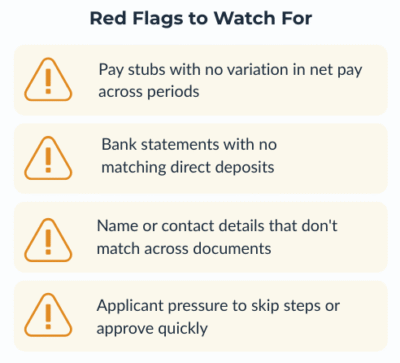
Not all red flags are obvious. Some require attention to detail. Pay stubs that show round numbers without variation are a warning sign. Most employees see slight changes in net pay due to taxes, deductions, or hours worked. A pay stub showing the exact same net figure every period may have been fabricated. Bank statements that do not show consistent direct deposits despite claimed employment are another signal worth investigating.
Inconsistencies between documents are equally important. If the name on the ID differs from the name on the application, or if the employer phone number is not listed anywhere public, ask for clarification before moving forward. Pressure to skip steps or rush approval should always slow the process down, not speed it up.
The Role of Professional Property Management in the Rental Screening Process
A professional property manager brings a structured, legally compliant screening process to every application. At Real Property Management Blue Sky, we verify income, identity, rental history, and credit for every applicant using consistent standards across all properties we manage in Pasco and Hillsborough County. Our process is designed to protect your investment and minimize vacancy without cutting corners.
Homeowners and investors who manage their own properties often struggle to keep verification consistent, especially when managing multiple units or navigating a high-volume rental market. Working with a professional manager ensures every application receives the same standard of review, every time.
A reliable tenant starts with a reliable rental screening process. Contact Real Property Management Blue Sky to learn how we protect your property from application to move-in.
Frequently Asked Questions
What is included in a rental screening process?
A thorough rental screening process includes identity verification, income confirmation, credit check, background check, and rental history review. Each element addresses a different risk category. Income verification confirms the applicant can afford rent. Rental history reveals how they behaved in prior tenancies. Together, these checks give a complete picture of applicant reliability.
How do landlords verify income during the rental screening process?
Landlords typically request two recent pay stubs, a W-2 from the prior year, and bank statements showing direct deposits. For self-employed applicants, tax returns and a profit and loss statement are standard. The industry threshold is gross monthly income of 2.5 to 3 times the monthly rent. Cross-referencing multiple documents reduces the risk of accepting falsified information.
How common is fraud in the rental screening process?
More common than most landlords expect. A 2024 analysis of nearly 5 million rental documents found 6.4% contained manipulated information. A separate survey found 84.3% of property managers received falsified pay stubs. Fraud is not limited to large markets. Single-family rental properties in suburban markets like Wesley Chapel and Land O Lakes face the same risks.
How long does the rental screening process typically take?
Most rental screening processes take 1 to 3 business days for a standard credit and background check. Rental history verification through previous landlords typically adds 2 to 3 additional days. Income document review depends on how quickly applicants submit materials. Using a digital screening platform and a secure document portal speeds up the process considerably.
What documents are required for rental history verification?
For applicants with prior rental history, landlords typically request previous lease agreements, written verification from past landlords, and documentation of on-time payment. Contacting previous landlords directly by phone is also standard. Ask specific questions about payment history, lease compliance, and property condition to get factual, useful responses rather than vague references.
Can a landlord use different screening criteria for different applicants?
No. The Fair Housing Act requires that the same screening standards be applied consistently to all applicants. Using different income thresholds, document requirements, or verification steps for different applicants creates legal exposure, even when the intent is not discriminatory. A written, documented rental screening process applied uniformly to every applicant is the safest approach.
What are the biggest red flags in a rental application?
Pay stubs with no variation in net pay across periods, bank statements that do not show regular direct deposits, inconsistencies between ID and application documents, and employer contact information that cannot be verified publicly are all warning signs. Pressure to approve quickly is also a red flag. A well-qualified applicant has no reason to rush the verification process.
Should landlords use a professional rental screening service?
For most landlords managing multiple properties, professional screening services save time and reduce risk. They provide structured reports on credit, eviction history, background, and in some cases income. The benefit is consistency. Every applicant goes through the same process, which supports compliance with fair housing requirements and reduces the likelihood of overlooking important information.

This content is provided for general informational and educational purposes only and does not constitute financial, legal, tax, or investment advice. Readers should consult with licensed professionals regarding their specific circumstances.
We are pledged to the letter and spirit of U.S. policy for the achievement of equal housing opportunity throughout the Nation. See Equal Housing Opportunity Statement for more information.
